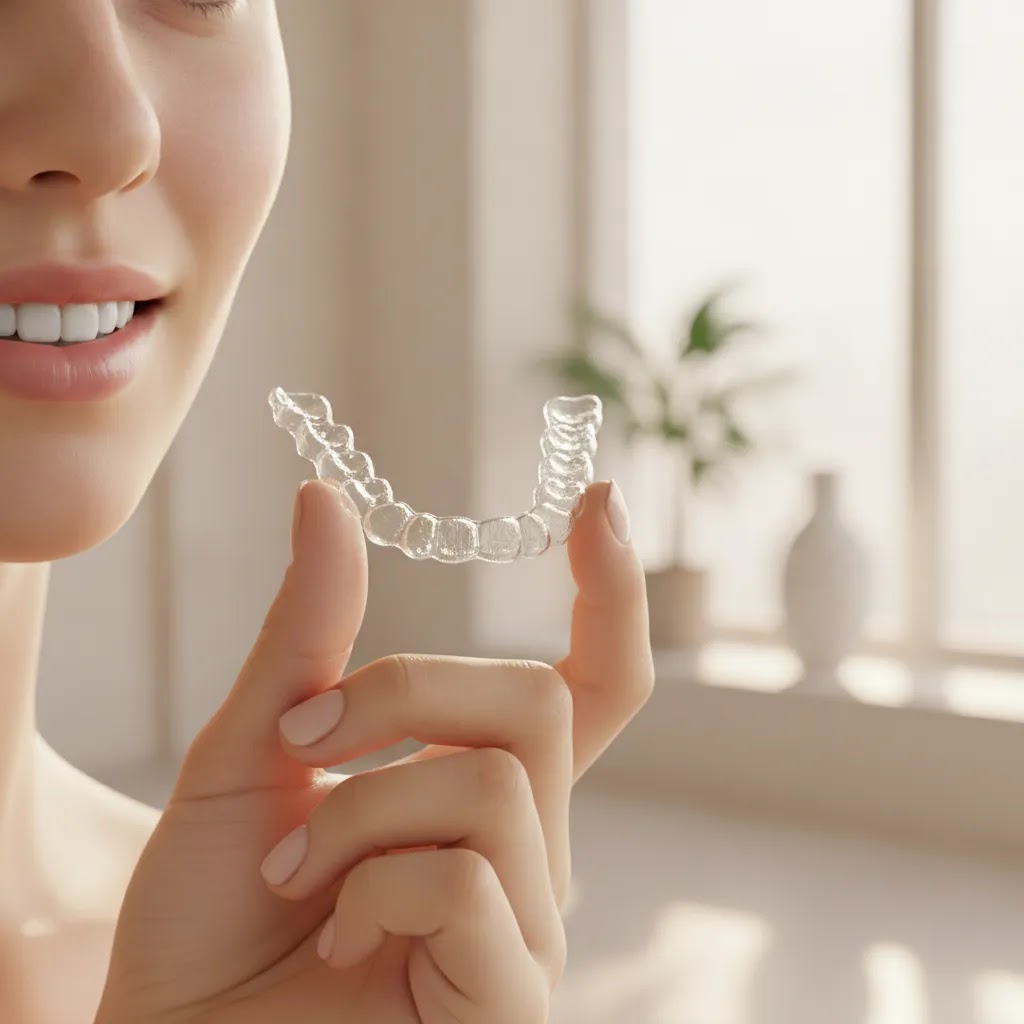
Buck Teeth: Causes, Risks and Aligner Fixes (2026 Guide)
Buck teeth usually describe front teeth that stick out more than expected, often because of an increased overjet. If your upper front teeth seem too prominent, the issue may be cosmetic, functional, or both.Many people first notice buck teeth in photos, on video calls, or when their lips do not rest comfortably over their front teeth. Others become aware of it for a more practical reason, such as chipped front teeth, mouth dryness, teasing when they were younger, or a bite that just never feels balanced. If that sounds familiar, you are not overreacting. Protruding front teeth can affect appearance, speech, comfort, and long term dental wear.This guide is for beginners and curious readers who want a clear explanation of how buck teeth develop and what the aligner correction pathway may look like. You will learn what causes the condition, how dentists assess severity, where clear aligners can help, where they may have limits, and what treatment steps commonly involve. If you want broader background first, you can explore more on before coming back to this topic.ContentsWho This Guide Is ForThis article is for adults and older teens who look at their smile and feel that the top front teeth sit too far forward. It is also useful if you have heard terms like or and want a plain English explanation of what they mean in real life. If you are comparing braces, aligners, or non orthodontic cosmetic fixes, this guide will help you sort out what each option can and cannot do.What You Will LearnWhat Buck Teeth Actually MeansThe everyday term versus the dental termBuck teeth is an everyday term, not a formal diagnosis. Most often, people use it to describe upper front teeth that protrude noticeably forward. In dental terms, the issue may involve increased overjet, a certain bite pattern, flared upper incisors, or a broader alignment problem.That matters because two smiles can look similar from the front but need different treatment plans. One person may have upper front teeth that tilt outward even though the jaws are fairly balanced. Another may have a skeletal difference in jaw position, which changes how the bite functions and how much tooth movement is realistically possible with aligners alone.Buck teeth is often part of a bigger bite pictureProtruding front teeth rarely exist in isolation. They often sit within a larger pattern of , which means the teeth or jaws do not line up ideally. You may also see crowding, spacing, lip strain, or lower teeth that contact the back of the upper front teeth in a way that increases wear.Some people assume buck teeth only mean aesthetics. The reality is that appearance may be the first thing you notice, but dentists usually assess function, gum support, enamel wear, and overall bite stability at the same time.Why self diagnosis only goes so farYou can absolutely notice that your front teeth stick out. What you cannot confirm on your own is why. That distinction shapes treatment. If your main issue is mild tooth flare, treatment could be fairly straightforward. If it involves jaw growth, deep bite, severe crowding, or periodontal problems, the pathway changes.If you are still learning the basics of , it helps to start with the problem first, then the appliance. A good treatment plan begins with diagnosis, not with picking a product style.Buck Teeth vs Overjet vs Overbite (And When It Matters)Here’s the thing: “buck teeth” is the label most people use when the top front teeth look too prominent. Clinically, that look can come from a few different patterns. The difference matters because treatment options and limits can change depending on what is actually driving the appearance.A simple way to picture the differencesIf you want a quick mental visual, think in three directions: forward, down, and angled.Why two people can look similar but have different diagnosesSelfies and front facing photos compress depth. Two people might both look like they have protruding upper front teeth, but one may have mostly a dental issue (tooth position and angle), while the other may have a skeletal driver (jaw relationship). Those cases can look similar from one angle but behave very differently during treatment.Dental driven protrusion usually has more flexibility with teeth alignment alone, while skeletal driven protrusion may have more limits without more comprehensive orthodontic planning. That does not mean improvement is impossible. It means the plan is built around what your bone, roots, and bite can realistically support.What you might notice day to dayYou cannot measure overjet or overbite accurately at home, and you should not try to “test” your bite by forcing your jaw forward. Still, you can notice patterns that are worth discussing at an assessment.That the same “buck teeth” look can be caused by different combinations of these factors. A clinician typically confirms the pattern with bite records, measurements, and imaging, not guesswork.How Buck Teeth DevelopGenetics can shape jaw position and tooth angulationSome people are simply born with a bite tendency that makes the upper teeth look more prominent. You may inherit jaw proportions, tooth size, arch shape, or lip posture patterns from your family. If one parent has prominent upper incisors or a retrusive lower jaw, a similar pattern may show up in children.This does not mean treatment is impossible. It means the underlying driver may be structural rather than purely habit related.Childhood habits may push front teeth forwardThumb sucking, prolonged pacifier use, and tongue thrusting can all place repeated pressure on front teeth. Over time, that pressure may move upper incisors outward or affect how the bite develops. Mouth breathing can also influence facial growth and lip posture in some cases, especially if it persists for years.Parents often feel guilty reading this, but there is little value in blame. What matters is recognizing the pattern early and getting proper assessment if the teeth appear to be drifting forward.Crowding and arch shape can make teeth look more prominentNot every case of buck teeth comes from a jaw issue. Sometimes there is just not enough room in the arch. The front teeth rotate or flare outward as they compete for space. In that situation, the teeth may look larger or more protrusive than they really are.This is one reason tooth position matters as much as tooth size. A person may feel their dental teeth are too large, when the actual issue is misalignment and lack of space.Bite patterns matter more than many people expectAn increased is one of the most common findings behind the buck teeth appearance. Overjet refers to how far the upper front teeth project horizontally ahead of the lower front teeth. That is different from overbite, which describes vertical overlap.People often mix those terms up, and that can cause confusion when researching treatment. If you want a broader overview of bite problems and straightening options, articles on and can help place buck teeth within the bigger picture.Buck Teeth in Kids and Teens: Do They Go Away?Parents often ask whether a child will “grow out of” buck teeth. The reality is mixed. Some factors can improve naturally, while others typically do not fully resolve without orthodontic guidance. The key is knowing what is likely to change with growth and what is more likely to persist.What can change naturally with growthSome childhood patterns may improve, especially if they are mainly habit driven and the habit stops early enough.Growth is not a treatment plan. It can shift the picture, but it is not predictable enough to rely on when the overjet is large or trauma risk is high.What typically does not “just go away”Some patterns are less likely to resolve on their own, even if the teeth look like they might.Early warning signs parents can look forYou do not need to diagnose your child. You can notice risk signals that justify a professional evaluation.If you see multiple signs together, it is usually worth getting a proper bite assessment rather than waiting and hoping.When early orthodontic evaluation may be discussedOrthodontic evaluation timing varies by child, and recommendations should come from a licensed clinician who has examined the bite and reviewed records. Still, many providers do encourage an earlier check during the mixed dentition years, which is when some baby teeth and some permanent teeth are present. The purpose is not always immediate treatment. It is often to identify whether the child is at higher risk for trauma, unfavorable wear, or developing a more complex bite pattern.That prominent upper front teeth can be more vulnerable to injury. In certain cases, earlier assessment may help reduce trauma risk by planning how to manage the bite as the child grows. That said, early intervention is not necessary for every child with slightly prominent incisors, and no reputable provider should promise that “early treatment guarantees you avoid braces later.”Health Risks and Daily EffectsHigher risk of trauma to front teethProtruding front teeth are often more exposed to accidental impact. A fall, sports injury, or even a bump during daily activity may be more likely to chip or crack upper incisors if they sit far forward. This is one of the clearest functional reasons dentists take prominent front teeth seriously.Speech, lip posture, and mouth comfortSome people with buck teeth feel their lips do not close naturally at rest. Others notice dryness, mouth breathing, or mild speech differences with certain sounds. Not everyone experiences this, but it can affect comfort throughout the day.If your lips have to work harder to close over the front teeth, the strain can become noticeable in photos and in your own facial awareness. People often describe it as feeling like their teeth are always “in the way.”Wear patterns and gum concernsBuck teeth do not automatically cause gum disease or tooth wear, but a misaligned bite may concentrate forces in less favorable places. Over time, that could contribute to enamel wear, mobility in some cases, or recession risk if teeth are positioned outside ideal bone support. This is why a proper exam matters before any cosmetic fix is attempted.Psychological and social effects are real tooMany adults seeking teeth straightening say the main issue is confidence. They smile less in pictures, cover their mouth while talking, or feel older school comments still affect how they see themselves. That does not make the concern “just cosmetic.” Your relationship with your smile influences social comfort, self image, and willingness to show up fully in work and personal life.Serbaris often frames smile care in lifestyle terms, which makes sense here. The impact of protruding teeth is not only clinical. It can shape how comfortable you feel speaking, smiling, and being photographed day to day.How Dentists Assess the ProblemThey look beyond the front viewA mirror gives you one angle. A clinical assessment looks at many. Dentists typically assess the face profile, lip support, bite relationship, tooth angulation, gum health, and available space. They may also take digital scans and X-rays to understand roots, bone support, and jaw relationships.At Sebaris, the general clear aligner journey described publicly includes consultation, X-ray or OPG imaging, intraoral scanning, and a customized treatment plan preview. That kind of sequence is helpful because it gives you more than a guess based on photos alone.Mild, moderate, and complex cases are not just labelsThe severity of buck teeth depends on the cause, not only on how obvious it looks. A moderate looking case may be simpler than a mild looking case if the roots, gums, and bite are favorable. On the other hand, a small visible protrusion may hide a deeper jaw relationship issue.This is where the difference between beauty fixes and true teeth alignment becomes important. Bonding, shaping, or contouring can sometimes change appearance, but they do not move roots into better positions. If the goal is stable bite correction, orthodontic planning usually matters more than surface changes.Questions a provider usually needs answeredIf you want a patient friendly walkthrough of what happens after the first appointment, gives a useful process overview.How Aligners Fix Buck TeethThe basic principleClear aligners move teeth gradually through a planned series of small position changes. For buck teeth, the goal may include retracting protrusive front teeth, reducing flare, coordinating the arches, and improving bite relationship. In suitable cases, this can create a straighter profile, a more balanced smile arc, and better lip comfort.If you are researching treatment styles, the broader service category explains the removable, low visibility model that many adults prefer over traditional appliances.The aligner correction pathway, step by stepWhat aligners do well in buck teeth casesAligners may work well when the issue is primarily dental, meaning the teeth are tilted or positioned forward but the case does not require major skeletal correction. They can also be a good fit for adults who want discreet treatment and value being able to remove trays for meals and oral hygiene.Public information from Sebaris emphasizes doctor led planning, digital scans, and ongoing monitoring. In a case like buck teeth, those details matter because controlled front tooth movement requires planning, not just tray delivery.How long treatment may takeTreatment time varies widely. Public Sebaris FAQ content states that clear aligner treatment can range from about six months to two years depending on the condition. That range is realistic for buck teeth because mild flare can move faster than a protrusion linked to crowding, deep bite, or multi arch coordination.No ethical provider should promise an exact timeline before diagnosis. Your teeth, roots, bone support, wear habits, and treatment compliance all influence the pace.Why compliance changes the resultAligners only work if you wear them consistently. If trays sit in their case for most of the day, the planned tooth movement slows or goes off track. That can lead to poor fit, extra refinement stages, and frustration that gets blamed on the treatment method instead of the wear pattern.If you are still comparing appliance types, and can help explain why some adults choose removable systems, while also reminding you that convenience only helps if you use the trays as directed.Limits and Other Treatment OptionsAligners are not the answer to every buck teeth caseSome protrusion is mainly dental and responds well to aligners. Some is skeletal and may need a more complex plan. Severe jaw discrepancies, impacted teeth, poor periodontal support, or cases needing major bite correction may require braces, specialist orthodontic management, or combined approaches. In a small number of adult cases, surgery may be discussed.Cosmetic fixes versus orthodontic correctionPeople often ask about teeth bonding, teeth reshaping, or teeth binding as shortcuts. These approaches may improve appearance in selected cases, especially where shape asymmetry or minor edge issues make teeth look more protrusive. They do not usually fix true buck teeth if the root position and bite are the real problem.Bonding can make a smile look smoother, but it cannot retract a forward tooth. Reshaping can reduce a sharp edge, but it cannot correct an overjet. A provider who explains this honestly is protecting your long term result.Braces still matter in some situationsTraditional braces may offer advantages in complex mechanics or cases requiring very precise root control. That does not make aligners inferior across the board. It means the best tool depends on the diagnosis. If you are trying to compare your options carefully, learning about is useful, but it should sit alongside realistic conversations about complexity and limits.Cost should be discussed clearlyPeople often delay care because they assume every orthodontic path demands a high lump sum. Serbaris publicly presents a flexible clear aligner model with a lower initial commitment than many traditional providers, along with monthly options. For readers in KL and Selangor who want more straight teeth without premium pricing, transparent payment structure can make it easier to explore diagnosis first instead of ruling treatment out early.Common MistakesChoosing a cosmetic shortcut before understanding the biteThe most common mistake is trying to fix a structural problem with a surface level treatment. If your front teeth stick out because of overjet, crowding, or jaw relationship, whitening, contouring, or bonding alone will not solve the root issue.Assuming all protruding front teeth are the sameTwo people can both say, “my teeth stick out,” while needing very different treatment plans. One may need minor tooth movement. Another may need bite correction, space creation, and careful monitoring.Focusing only on the visible front teethYour smile is not just the four front teeth. Providers must consider the whole arch, the opposing bite, and the way teeth contact during function. Stable teeth straightening depends on those relationships.Underestimating retainer wear after treatmentTeeth can drift after successful treatment if retention is neglected. This is especially relevant for front teeth because even small relapse is easy to notice. Any discussion of aligner correction should include the retention phase, not just the active trays.Can You Fix Buck Teeth at Home? (DIY Risks and What’s Actually Safe)It is normal to search for at home fixes when you feel self conscious about your smile. But when it comes to moving teeth, DIY methods carry real risks. Teeth are anchored in living bone and supported by gums and ligaments. Moving them too fast, in the wrong direction, or without monitoring can cause damage that is expensive and sometimes difficult to reverse.DIY “moving teeth” hacks can be harmfulWhat you might see online includes rubber bands, improvised aligners, forcing teeth with pressure devices, or copying someone else’s tray sequence. The problem is not just that these methods may not work. The bigger issue is that they can move teeth unpredictably.The reality is that rubber bands and other force hacks are not “natural” because they are small. They can apply a lot of force to the wrong tooth in the wrong direction, especially without anchors and monitoring.What is reasonable and safe to do at homeYou cannot safely straighten teeth at home without a clinician designed plan, but you can do a lot to protect your teeth and set yourself up for better outcomes if you pursue orthodontic treatment.How to vet online information and treatment claimsA legitimate orthodontic plan typically involves diagnosis, a customized movement sequence, and ongoing monitoring. If a method skips those steps, it is not just “cheaper.” It is usually missing safety checks.When you are evaluating anything you see online, look for these practical signals:If you are tempted by shortcuts, it helps to remember why providers insist on records and supervision. It is not just process. It is risk management for your teeth, gums, and bite.Next StepsIf you suspect you have buck teeth, start with diagnosis, not with guesswork. A proper assessment can tell you whether the issue is mainly overjet, crowding, incisor flare, or a broader bite relationship. Reading more about malocclusion and overjet can help you ask better questions at your appointment.You can also browse for broader bite and alignment topics, or visit if you want a clearer picture of how consultations, scans, and treatment planning usually unfold. For a service specific overview, Sebaris is one resource people in Klang Valley may use to compare clear aligner pathways, especially if they want doctor led care and a more flexible payment model.GlossaryBuck teethA common term for upper front teeth that protrude noticeably forward.OverjetThe horizontal distance between the upper and lower front teeth.OverbiteThe vertical overlap of the upper front teeth over the lower front teeth.MalocclusionA general term for teeth or jaws that do not align ideally.IPRInterproximal reduction, a controlled polishing of tiny amounts of enamel between selected teeth to create space.AttachmentsSmall tooth colored shapes bonded to teeth to help aligners grip and move teeth more effectively.RetainerAn appliance worn after treatment to help keep teeth in their new positions.Frequently Asked QuestionsAre buck teeth the same as overjet?Not exactly. Buck teeth is a casual description, while overjet is a specific dental measurement of how far the upper front teeth sit ahead of the lower front teeth. Many people with buck teeth do have increased overjet, but the appearance can also involve flared teeth, crowding, or jaw position. That is why diagnosis matters before treatment starts.Can clear aligners fix buck teeth?Clear aligners may fix some buck teeth cases, especially when the problem is mainly dental rather than skeletal. They can help retract protruding front teeth, improve spacing, and coordinate the bite if the case is suitable. More complex cases may need braces, elastics, specialist care, or other approaches. A scan and bite assessment are usually needed before anyone can say how suitable aligners are.Do buck teeth cause health problems or are they only cosmetic?Buck teeth can be cosmetic, functional, or both. Some people mainly dislike the appearance, while others have a higher risk of trauma to the front teeth, lip strain, speech concerns, or uneven bite pressure. The severity varies from person to person. A dental exam helps separate what is mainly aesthetic from what may affect long term oral health.Can teeth bonding fix buck teeth?Teeth bonding can improve shape and surface appearance, but it usually does not fix true buck teeth if the teeth themselves are positioned too far forward. Bonding adds or reshapes material on the visible part of the tooth. It does not move the root or correct bite mechanics. In mild visual cases, it may be used after orthodontic alignment, not instead of it.How long does it take to correct buck teeth with aligners?The timeline depends on why the teeth protrude and how much movement is needed. Mild cases may move faster, while more complex cases involving crowding, bite correction, or multiple stages often take longer. Some public provider guidance in Malaysia gives a broad range of six months to two years for aligner treatment. Your actual timeline may differ based on diagnosis and how consistently you wear the trays.Are braces better than aligners for buck teeth?Braces are not automatically better, but they may be more suitable in some complex cases. Aligners can work very well for selected protrusion patterns, especially if the teeth are mainly flared or misaligned rather than part of a severe jaw discrepancy. Braces may offer more control in certain movements. The better option is the one that matches the biology of your case.Can adults still fix buck teeth, or is it too late?Adults can often correct buck teeth successfully. Teeth can move throughout adult life if the gums and bone are healthy enough and the treatment plan is well designed. Adult cases may require different planning than growing children because jaw growth is already complete. Even so, many adults choose teeth straightening later in life for function, appearance, or both.Will aligners change my face if I fix buck teeth?They may change facial appearance subtly, but usually by improving lip support, smile balance, and profile harmony rather than dramatically altering facial structure. If the protrusion comes mainly from tooth position, retracting the front teeth can make the smile look less prominent. If the issue is skeletal, facial change from aligners alone may be limited. This is one reason realistic treatment planning matters.Do buck teeth come back after treatment?They can relapse if retention is poor. Teeth naturally have some tendency to shift over time, especially after orthodontic movement. Wearing retainers as instructed helps reduce that risk. The exact retainer plan varies, but the principle is consistent: active treatment moves teeth, retention helps keep them there.How do I know if I need orthodontic treatment or just cosmetic shaping?A good rule is this: if the teeth are actually out of position, you likely need orthodontic treatment, not just cosmetic reshaping. Cosmetic shaping can refine edges and proportions, but it does not change tooth roots or bite relationship. If your front teeth project forward, your lips do not close comfortably, or your bite feels off, an orthodontic assessment is usually the smarter first step.What does having buck teeth mean?It usually means your upper front teeth look more prominent than expected, often because they sit further forward than the lower front teeth. In dental terms, the “buck teeth” look may relate to increased overjet, flared upper incisors, crowding that pushes teeth outward, or a jaw relationship pattern. A clinician confirms which pattern applies by measuring the bite and reviewing records like scans and X-rays.What does the term “buck teeth” mean?Buck teeth is a non medical term people use to describe front teeth that stick out. It is not a formal diagnosis, and it does not tell you the cause on its own. Two people can use the same term, but one might have a tooth position issue while another might have a jaw relationship issue. That is why dental assessment matters before choosing any fix.Are buck teeth attractive?Attractiveness is subjective. Some people like a bit of tooth prominence and feel it gives character to a smile, while others feel self conscious about it, especially in photos or video calls. From a dental perspective, the more important question is whether the protrusion affects comfort, trauma risk, speech, or bite stability. If you like how your smile looks and your bite is healthy, treatment may be optional. If you feel discomfort, frequent chipping, or lip strain, it is worth discussing options with a dentist or orthodontic provider.Do buck teeth go away?Sometimes mild prominence in kids can improve as permanent teeth erupt or as habits stop early, but buck teeth do not always go away naturally. If the cause is crowding, a significant overjet, or a skeletal jaw relationship pattern, the look may persist into the teen years and adulthood. If you are unsure, an orthodontic assessment can clarify whether observation is reasonable or whether early planning may be helpful.Key TakeawaysConclusionBuck teeth can seem like a simple appearance issue, but the real story is often more detailed. The front teeth may project forward because of habits, crowding, jaw growth, or a broader bite pattern. That is why treatment should begin with diagnosis, not assumptions. In some cases, clear aligners can create meaningful improvement by repositioning protrusive front teeth and coordinating the bite. In others, a more complex orthodontic plan may be the better route.If you are at the early research stage, focus on learning the cause of your protrusion and the likely correction pathway. Read about overjet, compare orthodontic options, and ask how any recommended treatment will address both tooth position and bite function. Sebaris can be one educational starting point for readers in KL and Selangor who want a doctor led, accessible explanation of aligner care. The goal is not just straighter looking teeth, but a healthier and more confident smile that fits your everyday life.This article is for educational purposes only and does not replace diagnosis, dental advice, or treatment from a licensed dentist or orthodontist. Suitability for aligners depends on your teeth, gums, bite, bone support, and overall oral health. Outcomes and timelines vary. Orthodontic treatment may involve risks such as discomfort, attachment use, enamel polishing in selected cases, relapse without retainers, or the need for refinements. If you have trauma, pain, loose teeth, gum bleeding, or jaw concerns, seek a clinical evaluation promptly. In Malaysia, dental treatment should be provided by appropriately licensed dental professionals and follow applicable professional and regulatory standards.