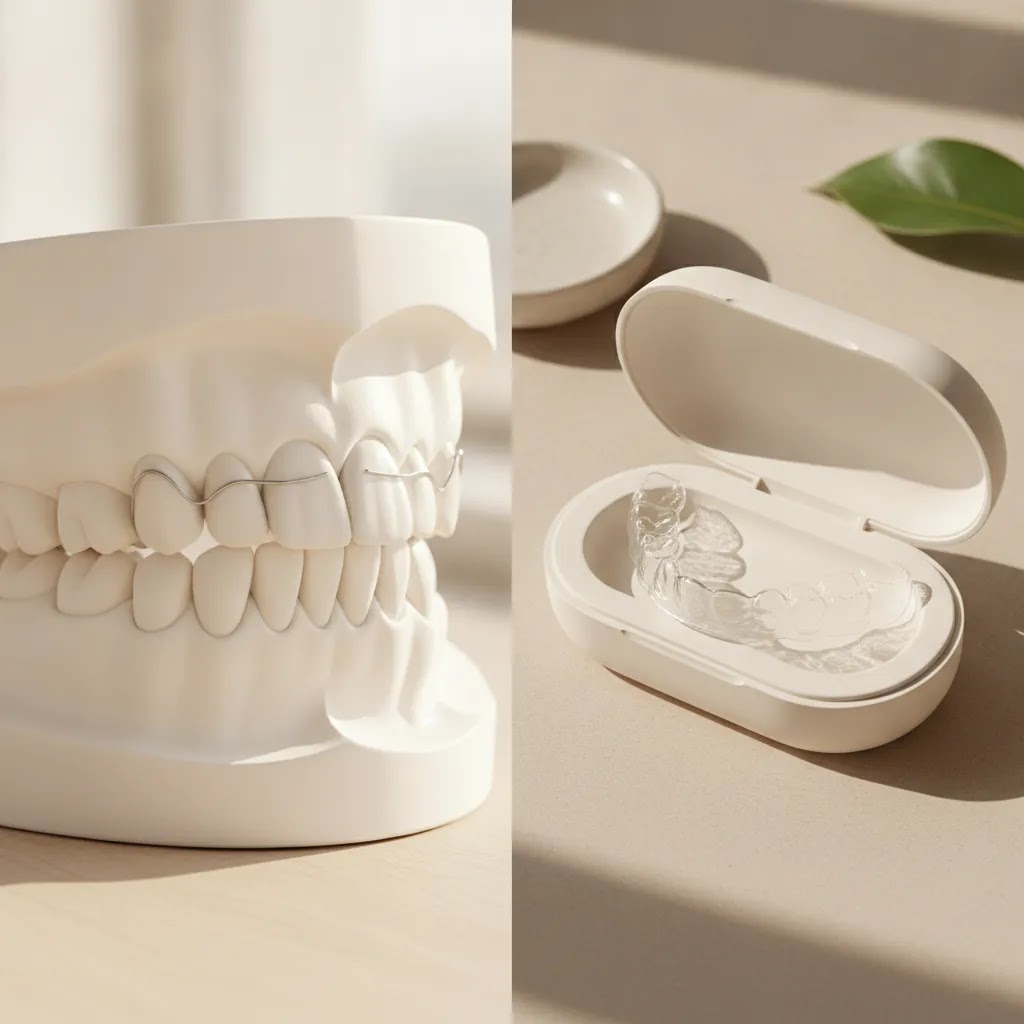
Permanent Retainer vs Removable (2026 Guide)
You finished braces or aligners, and now the less glamorous question shows up: what keeps your teeth from drifting back? That is where the permanent retainer vs removable decision matters. Both options are widely used after orthodontic treatment, but they solve the same problem in very different ways. A fixed wire stays bonded behind certain teeth full time, while a removable retainer depends on you wearing it as directed. If you are still learning the basics of aftercare, it helps to start with , because hygiene habits often shape which retainer feels realistic long term. This guide compares fixed wire and clear removable retainers head to head, with plain-English pros, cons, and the situations where each one tends to make more sense.ContentsQuick VerdictChoose a permanent retainer if your main concern is forgetting to wear something and you want ongoing support on the teeth most likely to shift, usually the front teeth. Choose a removable retainer if you want easier cleaning, easier repairs, and more control over your routine.For most people, this is not a question of which retainer is universally better. It is a question of which trade-off you can live with. A bonded wire reduces dependence on memory, but it can make flossing more tedious and may need repair if it loosens. A removable retainer is simpler to clean and replace, but it only works if you actually wear it as prescribed.That is why the best retainer after braces or aligners often depends less on marketing and more on your habits, bite pattern, and how much relapse risk your dentist is trying to control.Permanent Retainer vs Removable at a Glance | Permanent Retainer | Removable RetainerPrice | Varies by clinic and repair needs | Varies by type and replacement frequencyTarget user | People likely to forget nightly wear | People comfortable following a wear scheduleKey strength | Works 24/7 without needing daily compliance | Easier cleaning and full-tooth coverage in many designsKey weakness | Harder flossing and hidden wire failures can happen | Easy to lose, crack, or stop wearingBest for | Protecting front teeth from small shifts | Structured long-term retention after braces or alignersWorst for | People with poor hygiene habits around wires | People who know they will skip wearDaily Wear and ConvenienceA fixed retainer wins on consistency because it is bonded in place. You do not need to remember it before bed, after meals, or while traveling. That can be a real advantage for people who struggled with compliance during treatment or simply do not trust themselves to keep up with a nightly routine.A removable retainer asks more from you. You need to wear it for the number of hours your provider recommends, store it properly, and avoid leaving it wrapped in a tissue at dinner. That sounds simple until real life gets involved.Winner on this dimension: permanent retainer. If convenience means not relying on memory, fixed wins. If convenience means being able to take it out whenever you want, removable may feel easier, but only if you are disciplined enough to wear it.Cleaning and Oral HygieneThis is where removable retainers usually pull ahead. You can take them out to brush and floss normally, then clean the retainer separately. Clear retainers need regular rinsing and gentle cleaning, and Hawley retainers also need care, but both are generally straightforward compared with flossing around a bonded wire.A permanent retainer can trap plaque and food around the bonded area if cleaning is rushed. Floss threaders, interdental brushes, or water flossers may help, but the routine is undeniably more effort. If that effort drops off, gum inflammation and tartar buildup become more likely.For readers already focused on maintenance, the Sebaris resources and its post on are useful examples of the kind of hygiene discipline that also matters with retention.Winner on this dimension: removable retainer. It gives you easier access for thorough oral hygiene, which matters a lot over years, not just weeks.How Well They Prevent Teeth From ShiftingA bonded retainer is strong for holding specific teeth, especially the lower front teeth, which are well known for drifting over time. Because it stays in place all day, it may lower the risk created by missed wear. That is its biggest clinical advantage.A removable retainer can also work very well, especially if worn exactly as directed. In some cases, it may cover more teeth than a bonded wire does, which can help maintain broader tooth positions. The catch is simple: a removable retainer on the bedside table does nothing.There is also a subtle limit with fixed wires. They usually stabilize certain teeth, not every tooth in the arch. If a patient assumes “fixed” means complete protection, that can lead to false confidence.Winner on this dimension: permanent retainer. For pure compliance-proof retention, fixed wins. For full-arch retention with excellent wear habits, removable can still be a strong option.How Fast Teeth Shift Without a RetainerTeeth can start shifting sooner than many people expect, especially in the early period after treatment ends. There is no single timeline that fits everyone, because relapse risk varies by your original crowding or spacing, how your bite fits together, and how stable the final tooth positions are. Still, the general pattern is that the earlier you are in the retention phase, the less forgiving skipped wear tends to be.From a practical standpoint, “shifting” usually shows up as small signs before it becomes obvious visually. You might notice your removable retainer feels tight when you put it back in, you see new crowding or twisting in the lower front teeth, a small gap reopens, or your bite feels slightly different when you close. Those changes can be subtle, but they can matter because retainers are made to fit a specific tooth position. Once the teeth move enough, the retainer may stop seating correctly.What to do if you missed wear depends on what you see and feel:The reality is that retention is not just about preventing dramatic movement. It is about preventing small changes from accumulating into a problem that is harder, slower, and more expensive to fix later.Breakage, Repairs, and Follow-UpA permanent retainer can loosen, partially debond, or bend. One challenge is that you may not notice a problem right away because the wire sits behind the teeth. If one part fails while the rest stays attached, unwanted tooth movement could begin before your next check.Removable retainers can crack, warp, or get lost, but the problem is usually obvious. You either see the damage or you cannot find the retainer. Replacements are inconvenient and may cost money, yet the failure is less hidden.If your retention plan follows , follow-up matters either way. Sebaris describes a doctor-led approach with customized planning, digital scans, and ongoing monitoring during treatment, which is relevant because retention quality often starts with how precisely the teeth were finished before the retainer stage. Their article on gives useful context on that broader process.Winner on this dimension: removable retainer. Problems are easier to spot, and replacement is often more straightforward than repairing bonded wire issues.Cost and Replacement RealityPeople often compare permanent retainer vs removable based on the initial fee, then get surprised by the long-term cost pattern. Fixed retainers tend to concentrate costs around placement and repair visits, while removable retainers tend to spread costs over time through remakes and replacements.For permanent retainers, cost is not only the first bonding appointment. Real-world expenses may include re-bonding one pad, re-bonding multiple teeth, repairing a bent wire, or fully replacing the wire if it is distorted or repeatedly debonding. Because failures can be partial and hard to see, the “cost” is not always just money, it can also include the time delay before the problem is caught.For removable retainers, a common cost driver is replacement frequency. Clear retainers can crack, get chewed by pets, warp if left in heat, or get lost in travel routines. Even careful patients sometimes need a remake over the years. The upfront price may feel lower, but repeated replacements can add up, especially if you only own one retainer and something happens to it.Practical budgeting comes down to asking the right questions before you commit:How lifestyle changes the math. Frequent travel increases loss risk. Nighttime grinding can increase cracking risk for clear retainers and stress on bonded wires. Pets can destroy trays quickly. Heat exposure can warp plastic retainers, and once a retainer is warped, it may stop fitting and stop doing its job. Replacement timing matters because a retainer that no longer fits can allow shifting, and shifting can then make the next retainer more complicated than a simple copy of the old one.Appearance and ComfortA permanent retainer is hidden behind the teeth, so it is usually invisible in casual conversation. That makes it attractive for people who want zero visible hardware. After the initial adjustment period, many people stop noticing it most of the time.A clear removable retainer is also discreet, though it may be visible up close and can affect speech slightly at first. A Hawley retainer is more noticeable because of the front wire, but it is sturdy and adjustable. Comfort depends partly on design, but also on whether you prefer a device that stays in your mouth all the time or one you remove and reinsert daily.Winner on this dimension: permanent retainer. It stays out of sight and out of mind for many users, though clear removable retainers come close.Permanent Retainer Disadvantages (Long-Term)Many patients like the “set it and forget it” idea of a bonded wire, then discover the long-term downsides are not about the first week. They are about the daily friction of living with it for years. If you have ever heard someone say “I hate my permanent retainer,” it is usually about cleaning burden, irritation, or the feeling that it is always in the way.Common long-term pain pointsThe hidden failure risk, in more detailOne of the most frustrating fixed retainer scenarios is a partial debond. The wire may still look present, but one tooth is no longer truly held. That creates a risk of slow movement that is easy to miss day to day. The retainer can look unchanged while the stability has changed.Day-to-day signs that can suggest a problem include roughness you do not remember feeling before, a wire that seems to flex when you press lightly with your tongue, new spacing or crowding that was not there, or faint “imprint” type marks where your teeth seem to be contacting differently. If you notice any of these, it is worth having the retainer checked rather than waiting for your next routine visit.Bite-related drawbacks you should not troubleshoot yourselfBite contacts, a bonded wire is not automatically neutral. In some bites, the wire or bonding pads may interfere with how the teeth come together, contribute to chipping or wear patterns in certain contact schemes, or create a persistent “tight” feeling on one tooth. That does not mean the retainer is wrong for you, but it does mean it needs clinician assessment. DIY bending, pulling, or trying to “flatten” the wire can worsen debonding or create unintended tooth forces.What about metal concerns like “metal toxicity” anxiety? Bonded retainers are typically made from dental-grade materials intended for intraoral use, but sensitivities can exist, and concerns deserve a real conversation with your dentist. If you have a known metal allergy history, or you develop persistent irritation, do not guess. Ask what material was used and what alternatives may be appropriate for your case.Pros and ConsStrengthsConsiderationsWho Each Option Fits BestA permanent retainer often fits people who know compliance is their weak spot. If you are likely to skip nights, misplace trays, or stop wearing a retainer once the “active treatment” mindset fades, fixed retention may be the safer bet for selected teeth.A removable retainer often suits people with solid routines, strong hygiene habits, and a preference for easier flossing. It may also appeal to patients who want a solution that is easier to replace and inspect.Some people end up with a combined approach, such as a bonded wire for lower front teeth plus a removable upper retainer. That decision should be based on your bite, relapse pattern, and your provider’s assessment rather than a one-size-fits-all rule.A Practical Note on Retainers After AlignersSebaris Aligner Studio focuses on doctor-led and describes a treatment journey built around consultation, digital X-rays, intraoral scanning, and a customized plan. For readers comparing retainer types after aligners, that context matters because retention is the maintenance phase of the same tooth-movement process, not a separate afterthought.The clinic positions its aligner care around flexible pricing, digital planning, and ongoing monitoring, with locations in Mid Valley and Subang serving the Klang Valley. If you are still early in your research, Sebaris can be one educational reference point for understanding how treatment planning and aftercare connect, especially if you are comparing retention needs after removable orthodontic treatment rather than after braces alone.How to Choose Between ThemUse these five filters before deciding which retainer type may suit you better.1. Be honest about complianceIf you skipped elastics, forgot aligners, or tend to abandon routines once the urgent phase ends, a permanent retainer may protect you from yourself. If you are meticulous and consistent, removable retention becomes much more attractive.2. Look at your cleaning habitsIf you already struggle to floss thoroughly, adding a bonded wire may make that worse. If your oral hygiene is strong and you are willing to use the right tools, fixed can still work well.3. Ask which teeth are most likely to relapseNot every tooth has the same relapse pattern. Lower front teeth often need careful long-term control. Ask whether your provider is trying to hold a small high-risk zone or an entire arch position.4. Consider how quickly you notice problemsDo you prefer a device where problems are obvious, like a lost or cracked tray? Or are you comfortable checking a bonded wire and attending reviews so hidden failures do not go unnoticed?5. Match the retainer to your lifestyle, not your ideal selfThe best retainer after braces or aligners is rarely the one that sounds best in theory. It is the one you will actually maintain for years. That may mean accepting a little inconvenience now to prevent a lot of frustration later.Frequently Asked QuestionsIs a permanent retainer better than a removable retainer?It may be better for people who are likely to forget wear, because it stays in place continuously. A removable retainer may be better for people who want easier cleaning and are confident they will follow instructions long term. The better choice depends on habits, hygiene, and which teeth need the most support.Do permanent retainers last forever?No. They can last a long time, but they may loosen, debond, or bend over time. Glue can fail, and bite forces or hard foods may affect the wire. Regular dental reviews help catch problems early, especially because some failures are not obvious at first glance.Are clear retainers the same as Hawley retainers?No. Clear retainers are transparent plastic trays that fit closely over the teeth. Hawley retainers usually combine an acrylic base with a visible front wire. Both are removable retainers, but they differ in appearance, feel, durability, and how adjustments are handled.Which retainer is easier to keep clean?Removable retainers are usually easier to keep clean because you can take them out and clean both your teeth and the retainer separately. Permanent retainers require more careful flossing around the wire and bonding points, which can be time-consuming if you are not used to it.Can teeth still move with a permanent retainer?Yes. A fixed retainer usually holds certain teeth, not every tooth in the mouth. If it loosens or only stabilizes part of the arch, some movement may still happen. That is one reason regular checkups and prompt repair matter even with bonded retention.What happens if I stop wearing a removable retainer?Your teeth may begin to drift, sometimes gradually and sometimes faster than expected. The amount depends on your original case, how long it has been since treatment ended, and which teeth are prone to relapse. A retainer that is skipped repeatedly may stop fitting properly.Is a bonded retainer only for people who had braces?No. Bonded retainers may also be used after clear aligner treatment if the provider believes certain teeth need continuous support. The choice is based on relapse risk and case details, not only on whether treatment used brackets or aligners.Can you have both a permanent and removable retainer?Yes. Some retention plans combine both. A common strategy is a bonded retainer on selected front teeth plus a removable retainer for broader arch retention. That can balance compliance support with full-arch control, though the exact plan should come from your dental provider.Which retainer is usually best after aligners?There is no universal answer. Many aligner patients do well with removable clear retainers because the format feels familiar. Others may need a bonded retainer for extra stability in high-risk areas. The best option depends on tooth movement history, finishing details, and wear reliability.Should I get a permanent retainer or removable?It depends on what you are optimizing for. If missed wear is your biggest risk, a bonded retainer may be helpful for the teeth most likely to relapse. If hygiene ease and easy replacement matter more, and you are confident you will wear it, a removable retainer may fit better. Many patients do well with a combined plan, but the right choice should follow a bite and relapse-risk assessment by your dental provider.Why do dentists not like permanent retainers?Some dentists are cautious with permanent retainers because they can make cleaning harder and may increase plaque or tartar buildup if the patient is not meticulous. Another concern is that partial debonding can be easy to miss, which may allow slow movement before anyone notices. In certain bites, a bonded wire or bonding pads may also interfere with tooth contacts, so careful case selection and follow-up are important.How fast do teeth shift without a permanent retainer?Teeth can begin shifting relatively quickly after treatment if retention is stopped, but the exact pace varies a lot by person and by tooth. Early after orthodontic treatment, teeth are often less stable, so missed retention can matter more. Common early signs include a retainer feeling tight, small spacing changes, lower front crowding, or a bite that feels different. If your retainer no longer seats fully, do not force it, and contact your provider promptly.What are the disadvantages of permanent retainers?Common disadvantages include more complicated flossing, higher risk of plaque and tartar buildup around bonding points if hygiene is inconsistent, and irritation from rough bonding or wire contact with the tongue. Fixed retainers can also partially debond without being obvious, which may allow slow tooth movement. In some bites, they may interfere with contacts or feel “tight,” which should be evaluated by a clinician rather than adjusted at home.Key TakeawaysBottom LineThe top-line verdict stays the same: pick a permanent retainer if missed wear is your biggest risk, and pick a removable retainer if easier hygiene and easier maintenance matter more. Neither is perfect. Fixed retention asks more of your cleaning routine, while removable retention asks more of your consistency. If you are comparing options after aligners, reviewing your treatment plan, cleaning habits, and relapse risk with a dental professional will give you a much better answer than any generic “best retainer” claim. If you want more context on aligner care and aftercare, explore Sebaris resources on and their broader clear aligner education pages.This article is for general educational purposes only and does not replace personalized dental advice, diagnosis, or treatment planning. Retainer selection should be based on an examination by an appropriately licensed dental professional. Orthodontic retention carries risks and limitations, including relapse, breakage, gum irritation, plaque buildup, and fit problems. Outcomes vary by case. If you notice pain, bleeding, a loose bonded retainer, a cracked retainer, or a retainer that no longer fits, seek professional assessment promptly. In Malaysia, dental care should be provided under appropriate professional oversight and in line with applicable clinical and regulatory standards.